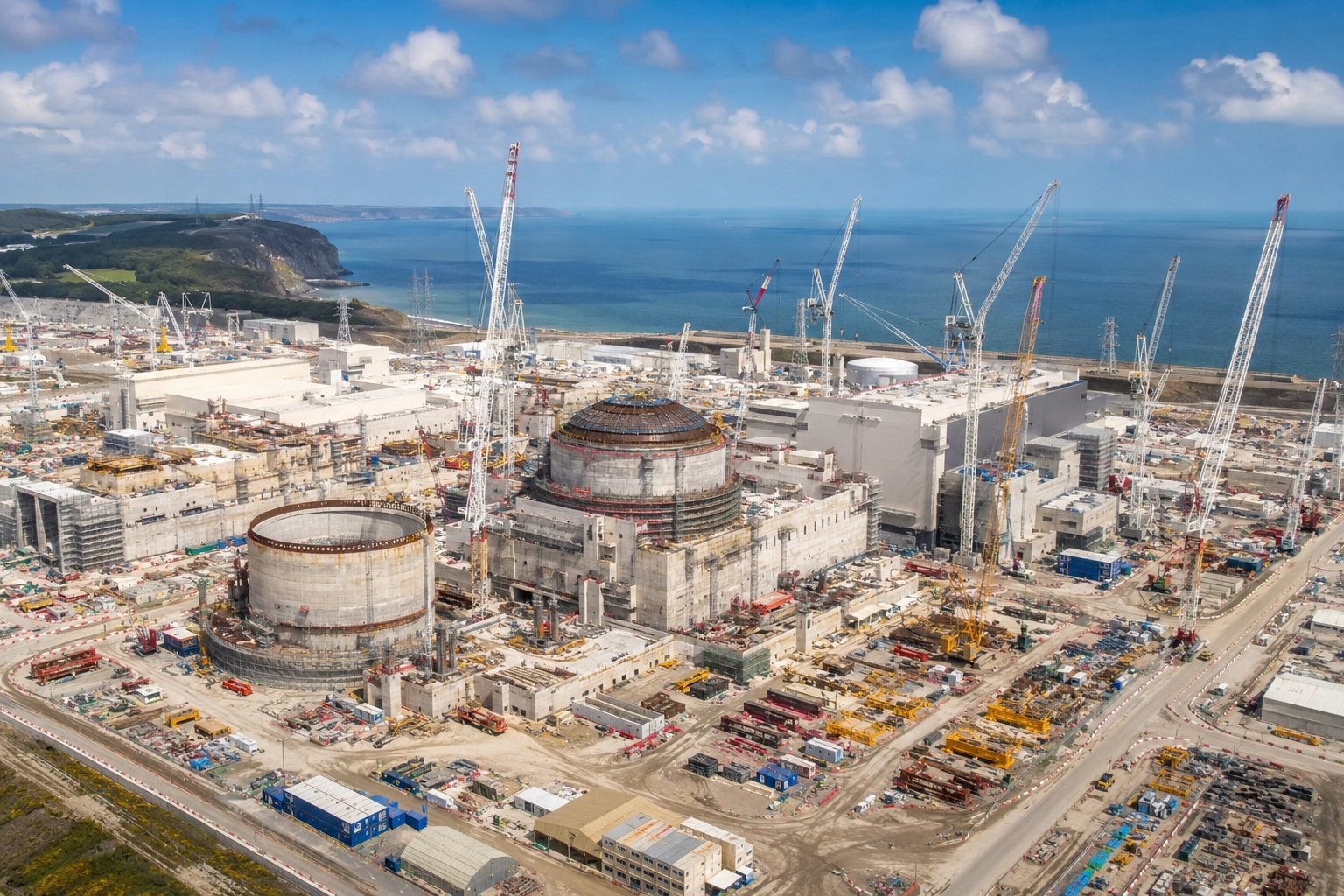
Helios-RH
Flight computers and sensor buses that keep working inside a reactor hall and beyond the Van Allen belts.
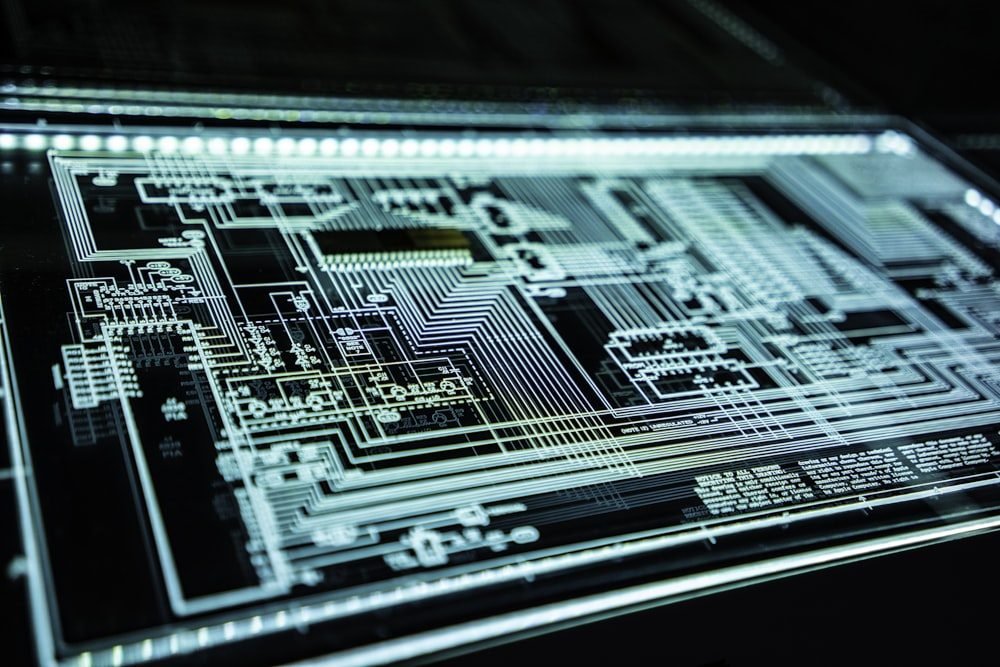
VGA-MER · Satellite bus avionics
The part of a small satellite that has to work for seven years without a service call.
Meridian is a satellite bus avionics stack — on-board computer, power conditioning, attitude electronics and the radio that talks to the ground. It flies on smallsat platforms in low and medium Earth orbit.
01 — Why it is built this way
A satellite in sun-synchronous orbit sees its ground station for a few minutes per pass. Meridian is built to make every safing decision itself and explain it afterwards, because there is no operator available at the moment it matters.
Battery management, peak power tracking and load shedding are in the core stack rather than bolted on per platform. Most smallsat losses we have investigated trace to power, not to the payload.
The command receiver is on a separate power domain from everything else and cannot be commanded off. If the spacecraft can be reached, it can be recovered.
The processing core is the Helios-RH orbital build. A Meridian customer inherits that qualification history, and we publish exactly which parts of it apply.

02 — Origin
Meridian exists because a constellation customer needed four identical spacecraft and the rad-hard FPGA at the centre of the design went end-of-life between the second and third build.
Rebuilding around a new device inside nine weeks, without re-opening the whole qualification argument, only worked because the interfaces between the processing core and everything else had been specified properly. The bus did not need to know which FPGA was inside it.
That discipline — a hard boundary between the core and the platform — is now the defining property of the product rather than an accident of one recovery.
03 — Architecture
The four functions that have to keep working when nothing else does.
Callout 01
Maximum power point tracking across the array strings plus battery management with cell-level monitoring. Load shedding priorities are defined in hardware, so a confused processor cannot shed the wrong thing.
Callout 02
The Helios-RH orbital build, running the bus software and the fault management state machine. Every safing transition is logged with the telemetry that triggered it.
Callout 03
On its own power domain, with no commandable path to switch it off. If the spacecraft is reachable, it is recoverable — which is the one property you cannot retrofit after launch.
Callout 04
Sun sensors, magnetometer and reaction wheels with a magnetorquer desaturation path. Sized for the pointing budget rather than the brochure figure.
Callout 05
CCSDS-framed S-band with a store-and-forward buffer sized for four missed passes, because ground segments have bad weeks.
Callout 06
Cell-level monitoring and an independent over-temperature cut. Sized for eclipse plus one contingency orbit at full load.
04 — Detail
Nothing in this stack is interesting when the spacecraft is healthy. All of it is designed around the days it is not.
Fault management
Four safe modes rather than one, so a minor anomaly does not cost a full recovery campaign and two days of science.
Every mode change records the telemetry that caused it. Operators reconstruct the decision rather than guessing at it.
A hardware timer that will command a full reset if the processor stops servicing it, on its own oscillator and rail.
Ground segment
Standard framing and file delivery, so operators can use existing ground software rather than something bespoke to us.
Buffering for four missed passes at nominal data rate.
Contact scheduling tooling supplied with the bus, because a spacecraft you cannot schedule is a spacecraft you cannot fly.
| Processing core | Helios-RH HRH-100 |
|---|---|
| Design life | 7years |
| Reference orbit | 705 km sun-synchronous |
| Bus voltage | 28V |
| Peak bus power | 42W |
| Battery capacity | 78Wh |
| Downlink rate | 2 to 15Mbit/s |
| Uplink rate | 64kbit/s |
| Pointing accuracy | 0.08° (3σ) |
| Payload interface | SpaceWire, CAN |
| Stack mass | 2.41kg |
| Safe modes | 4 graduated |
Full interface control documents, environmental qualification reports and the traceability matrix are released under NDA. Ask for the document index rather than a brochure.
Request the document index05 — Qualification
Orbit, eclipse profile, radiation environment and link budget. Everything downstream is sized from this, so it is done before any hardware decision.
Array sizing, battery capacity and pointing budget fixed against the payload's real duty cycle rather than its peak.
The full stack plus a payload emulator, run continuously for six weeks including injected faults and simulated missed passes.
Thermal vacuum, vibration and EMC to the launch vehicle's user guide, with functional test at each extreme.
The operations team flies the flatsat through nominal and contingency scenarios before launch, not after.
Commissioning plan written during design. First contact procedures are rehearsed against the flatsat until they are dull.

06 — Where it is built
Meridian stacks are integrated and environmentally tested in Chantilly. The flatsat stays with us for the life of the mission, so when something odd happens on orbit there is an identical article on a bench to reproduce it against.
That flatsat has earned its keep more than once. Reproducing an anomaly on the ground turns a debate into a test.
Ground systems and pass-planning tooling are supported from Adelaide, which is convenient for southern-hemisphere station coverage and inconvenient for our meeting schedule.
07 — Who uses it
Four operators fly Meridian-based buses, the earliest continuously since 2019.
Two university missions with instrument payloads on the standard SpaceWire interface.
Qualified to two launch vehicle user guides, with the environmental data package to match.
Related
Flight computers and sensor buses that keep working inside a reactor hall and beyond the Van Allen belts.

A triplex flight control and display suite certified to DO-178C Design Assurance Level A.
In-core and ex-core measurement chains for research reactors and advanced modular plant.
Next step
Tell us what it has to survive and how long it has to keep working. We will tell you whether Meridian is the right answer — including when it is not.
Talk to an engineer