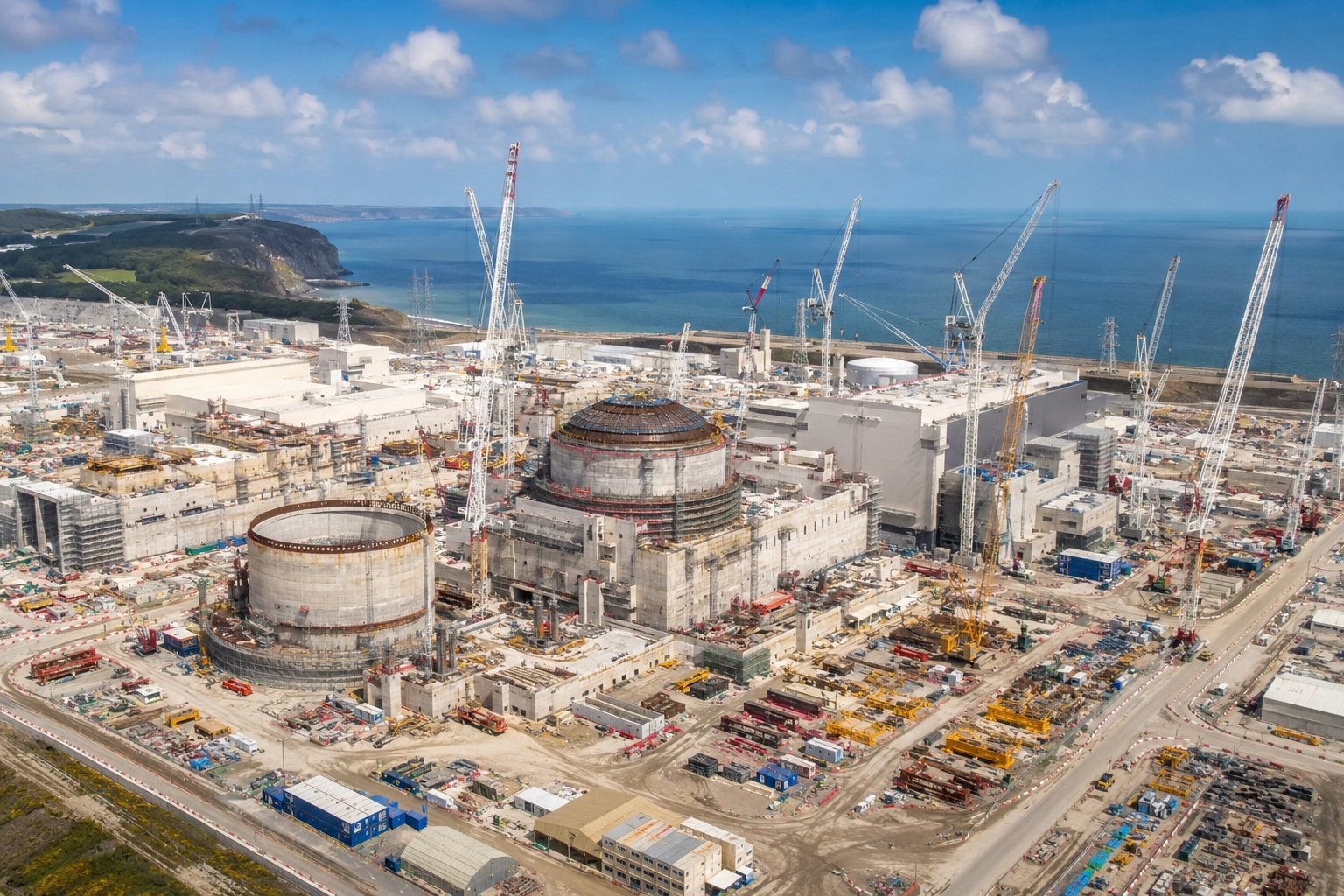
Helios-RH
Flight computers and sensor buses that keep working inside a reactor hall and beyond the Van Allen belts.
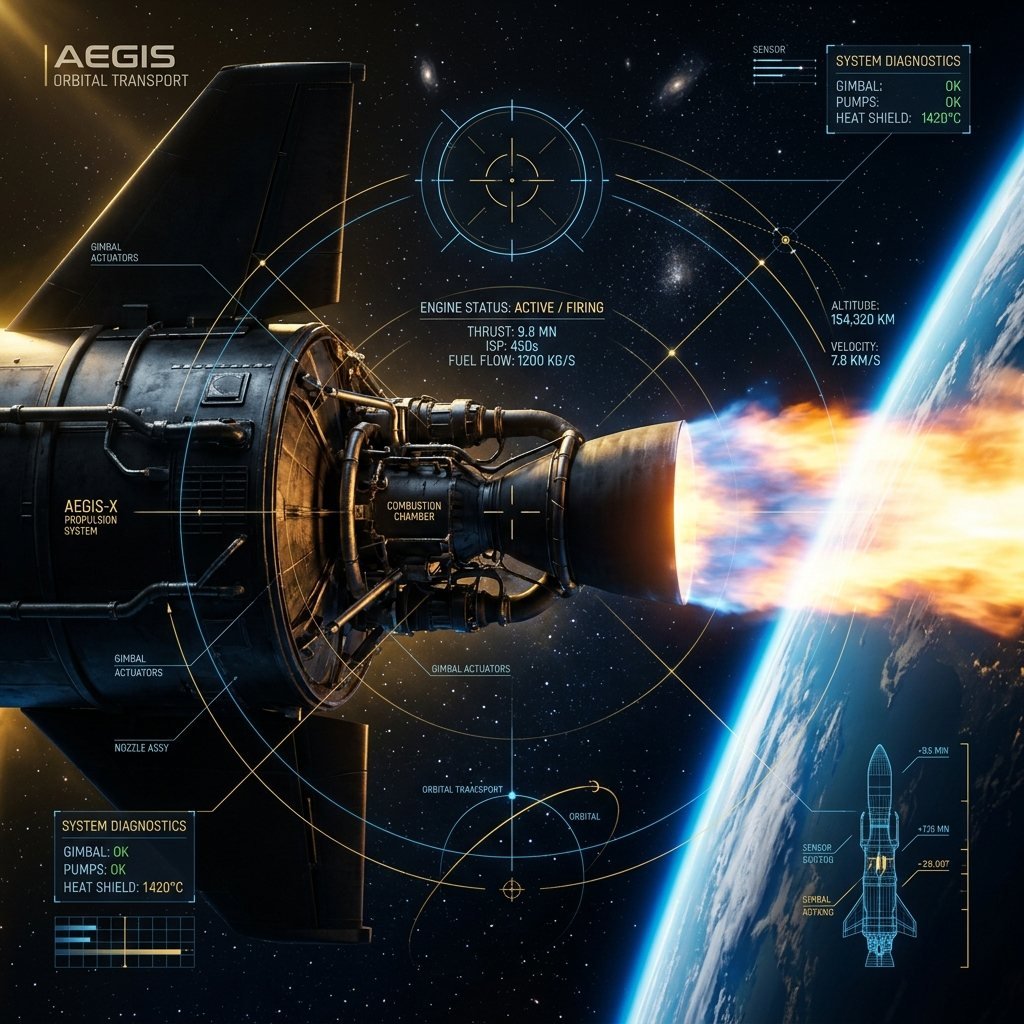
VGA-V9 · Propulsion control
Twelve milliseconds from anomaly to shutdown, and a full recording of why.
Vector-9 is engine sequencing, valve actuation and high-rate diagnostics for liquid propulsion — on test stands first, and increasingly in flight.
01 — Why it is built this way
Every channel is recorded at full rate for the whole run, not decimated and not triggered. The data that explains an anomaly is almost never the data somebody thought to trigger on.
Redline comparisons run in programmable logic on a fixed cadence. Software configures the limits; software does not sit in the abort path. Twelve milliseconds is a bound, not an average.
Sequences are declarative, version-controlled and diffable. Reviewing a change to a hot-fire sequence should not require reading imperative code written under time pressure.
The flight controller is the test-stand controller with the recording depth reduced and the connectors changed. Behaviour proved across hundreds of stand runs carries directly to flight.

02 — Origin
Vector-9 came out of an investigation, not a product plan. A customer had lost an engine on a stand and the recorded data stopped 900 milliseconds before the event, because the recorder was triggered by the same logic that detected the anomaly.
The trigger fired. The recorder started. By then the interesting part had happened.
Continuous full-rate recording is not a feature we added. It is the reason the programme exists, and it is why the storage budget on a Vector-9 stand controller looks excessive until the first time you need it.
03 — Architecture
Note that the recording path is fed before the abort logic, not after it.
Callout 01
Sixty-four differential channels at 20 kHz with simultaneous sampling, so cross-channel timing is meaningful. Skewed sampling across channels makes a transient impossible to reconstruct afterwards.
Callout 02
Fed directly from acquisition, before any decision logic. Nothing about the recording depends on anything noticing that something interesting is happening.
Callout 03
Limit comparisons run in programmable logic on a fixed 12 ms cadence. Software sets the limits at configuration time and is not in the decision path at run time.
Callout 04
The abort output is a hardwired de-energise path to the valve drivers. It does not traverse the sequencer, the network or the operator station.
Callout 05
Sequences are data, held in version control and reviewable as a diff. A change to a hot-fire sequence gets the same review a code change gets.
Callout 06
Full situational display and configuration authority, and deliberately no authority in the abort path. The operator can stop a run; the operator cannot prevent one being stopped.
04 — Detail
The same controller, in two build standards, so behaviour proved on the ground is the behaviour that flies.
Build standards
Full recording depth, 64 channels, mains powered, rack mounted. The development and qualification workhorse.
Reduced recording depth, conduction cooled, vehicle connectors, qualified to the launch environment. Same logic, same sequencer format.
Hardware-in-the-loop model of the engine for sequence development, so sequences are exercised long before propellant is loaded.
Data handling
Every run archived in full at native rate with a self-describing format. Nothing is decimated on the way in.
Single distributed clock across acquisition, sequencing and video, so a transient can be lined up across all three.
Redline margins, valve timings and anomaly candidates produced automatically within minutes of shutdown.
| Analogue channels | 64 differential |
|---|---|
| Sample rate | 20kHz/channel |
| Sampling | Simultaneous, no multiplexing |
| Resolution | 18bit |
| Redline cadence | 12ms |
| Abort path | Hardwired, de-energise |
| Valve driver channels | 16 |
| Driver current | 6A continuous |
| Recording | Continuous, full rate |
| Archive per run | up to 340GB |
| Time base accuracy | ±40ns |
| Sequence format | Declarative, version controlled |
Full interface control documents, environmental qualification reports and the traceability matrix are released under NDA. Ask for the document index rather than a brochure.
Request the document index05 — Qualification
Channel list, ranges and locations agreed against the failure modes worth catching, not against the available connector count.
Written and exercised against the hardware-in-the-loop engine model before any propellant is loaded.
Valve timings and sequence behaviour proved on inert fluid with the full recording chain live.
Limits derived from the engine model and from cold-flow data, reviewed and version-controlled like any other design artefact.
Progressive duration build-up. Post-run analysis is automated so the turnaround between runs is limited by hardware, not by spreadsheets.
The flight controller inherits the sequences and redlines proved on the stand, with the qualification delta documented explicitly.

06 — Where it is built
Vector-9 is developed in Huntsville because that is where the test stands are, and because a controller designed at a distance from the hardware it commands is a controller full of assumptions.
Our engineers sit through the runs. Not because they need to — the system is autonomous — but because the questions that improve the next build are the ones you only think of while watching.
Flight builds are integrated in Chantilly and supported at Cape Canaveral during launch campaigns.
07 — Who uses it
Three liquid engine programmes use Vector-9 as the primary stand controller.
Flight builds on one vehicle programme, currently in qualification.
Two university propulsion laboratories run V9-STAND installations.
Related
Flight computers and sensor buses that keep working inside a reactor hall and beyond the Van Allen belts.
A triplex flight control and display suite certified to DO-178C Design Assurance Level A.
Command, telemetry and attitude electronics for small satellite platforms in low and medium Earth orbit.
Next step
Tell us what it has to survive and how long it has to keep working. We will tell you whether Vector-9 is the right answer — including when it is not.
Talk to an engineer